Real photo restorations, real record transcriptions, and real pages from a finished Legacy Leaf family history.
Photo restoration
Faded, cracked, and nearly lost. Brought back.
Every restoration starts from the original and keeps it. The restored copy goes in your book and your Family Archive; the original is never altered.
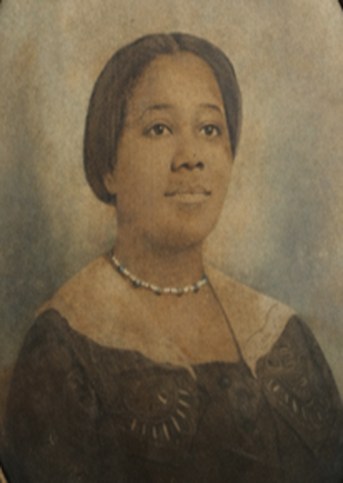
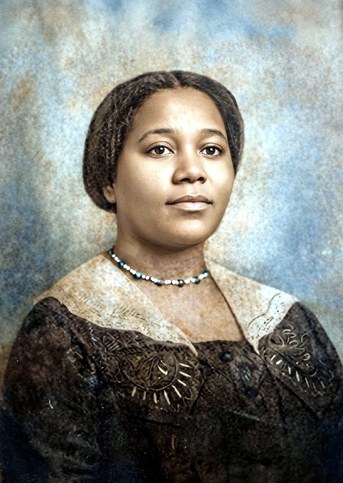
BEFOREAFTER
Amanda "Mandy" Cotton Gober
A hand-finished studio portrait, faded to sepia. Restored for clarity and color, down to the blue stones in her necklace.
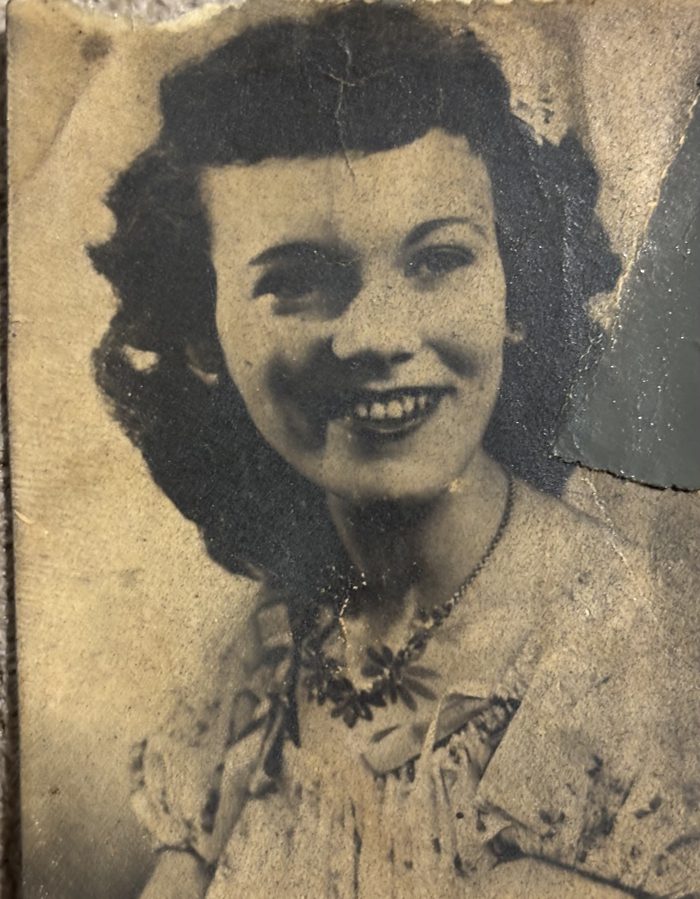
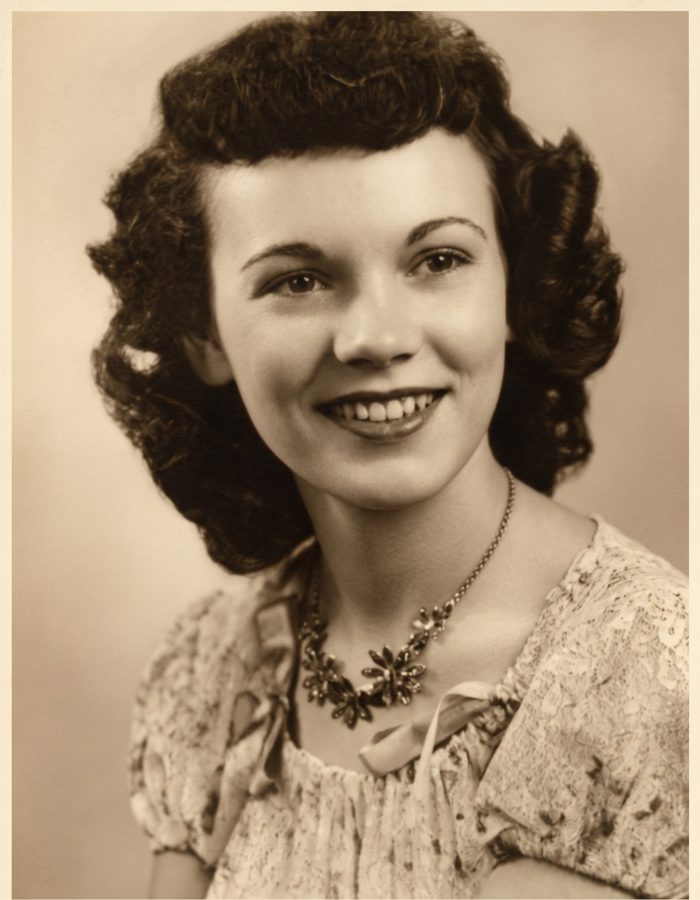
BEFOREAFTER
Gloria Grey as a young woman
Cracked, stained, and torn at the corner. Restored to a clean studio portrait, down to the flowers in her necklace.
BEFOREAFTER
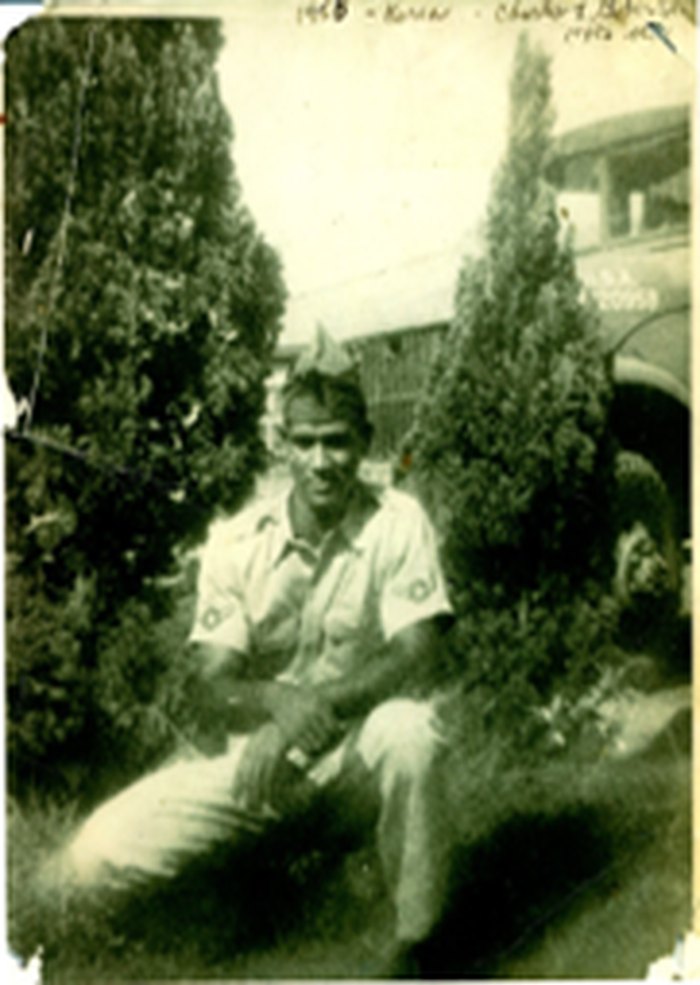
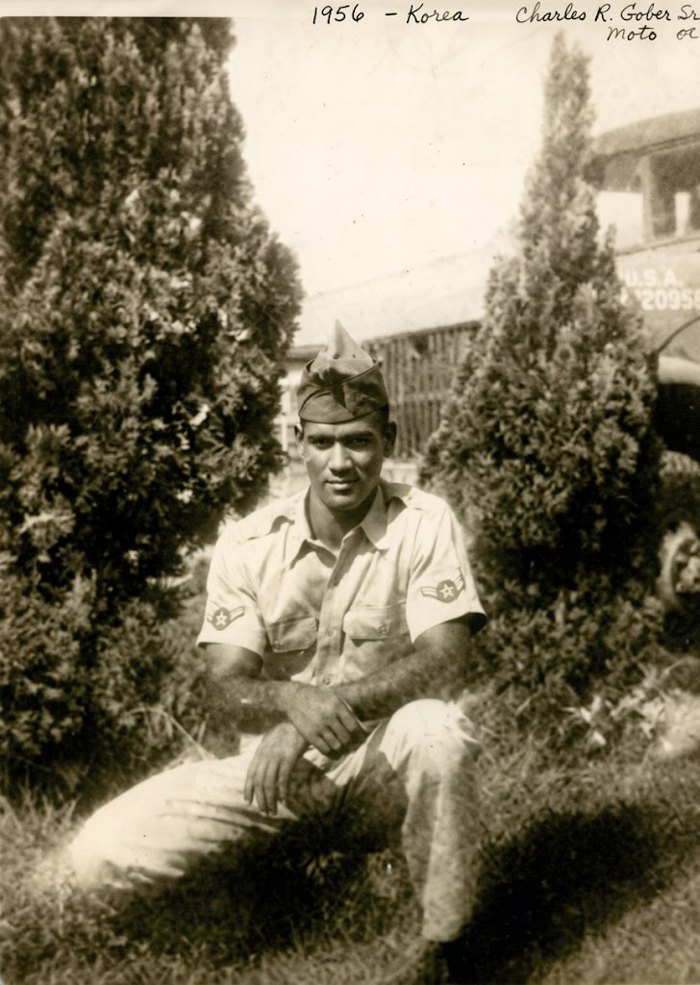
Charles R. Gober Sr., Korea, 1956
A small, green-tinted snapshot with a creased border. Restored to a sharp print, with the handwritten caption preserved.
BEFOREAFTER
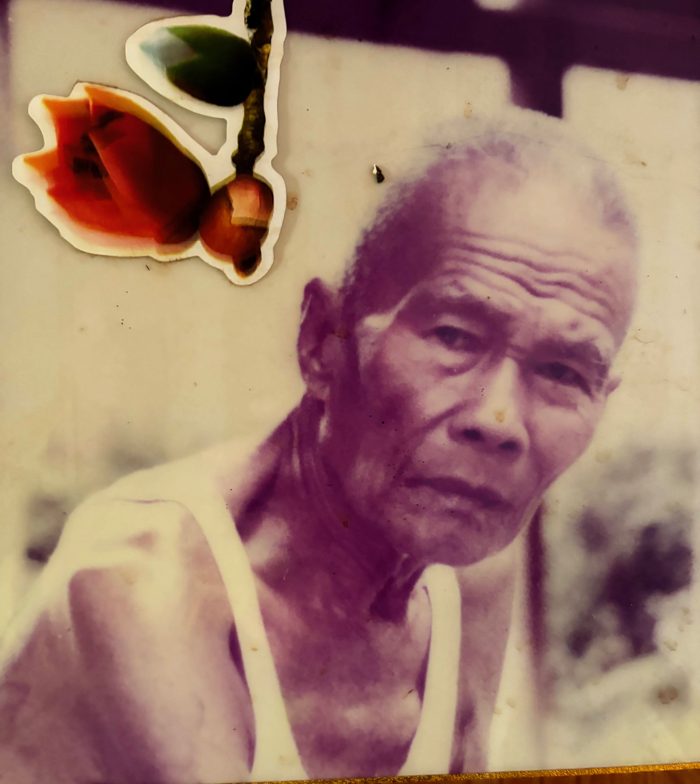
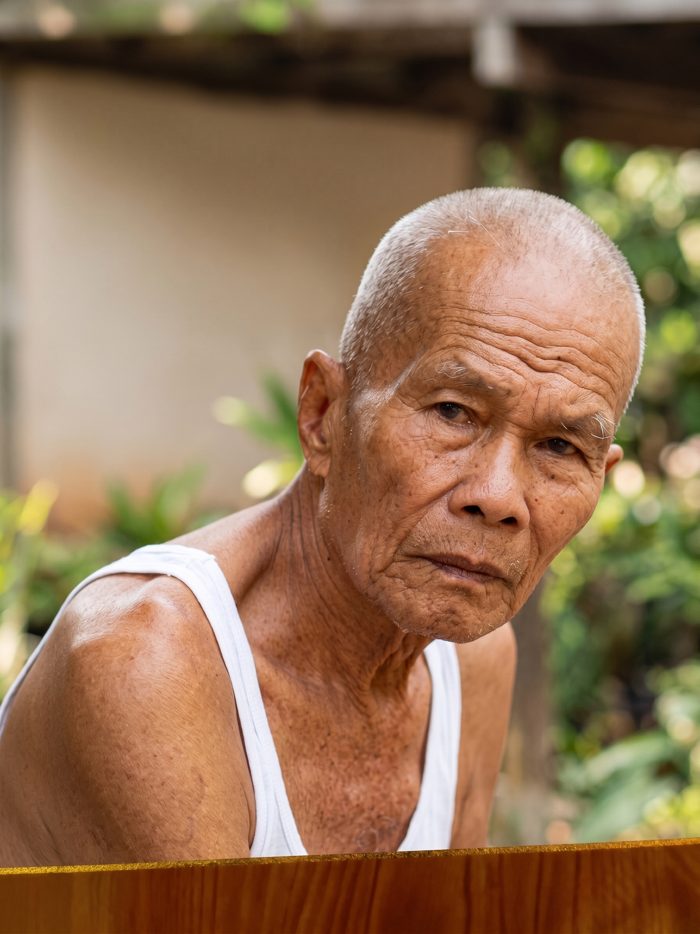
A grandfather's portrait
A print gone purple with age, photographed where it hangs, with a decoration stuck to the corner. Restored to natural color and detail.
BEFOREAFTER
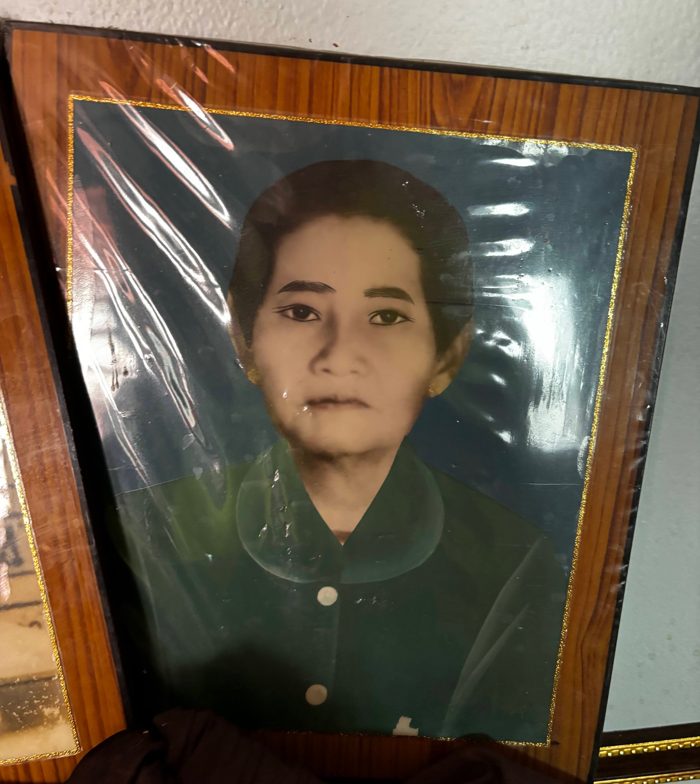
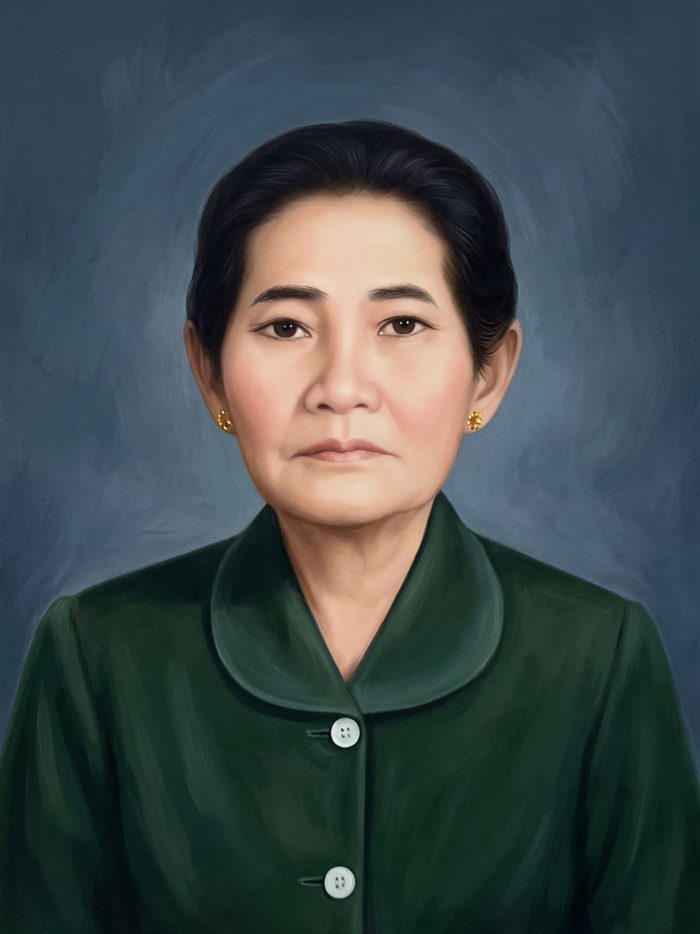
A grandmother's framed portrait
The only copy, sealed behind a plastic sleeve and photographed through the glare. Rebuilt into a clean portrait the whole family can share.
Record transcription
When a record is hard to read, we read it for you.
Faded, damaged, handwritten, or foreign-language records are transcribed to the best of our ability, cited, and explained in plain language.
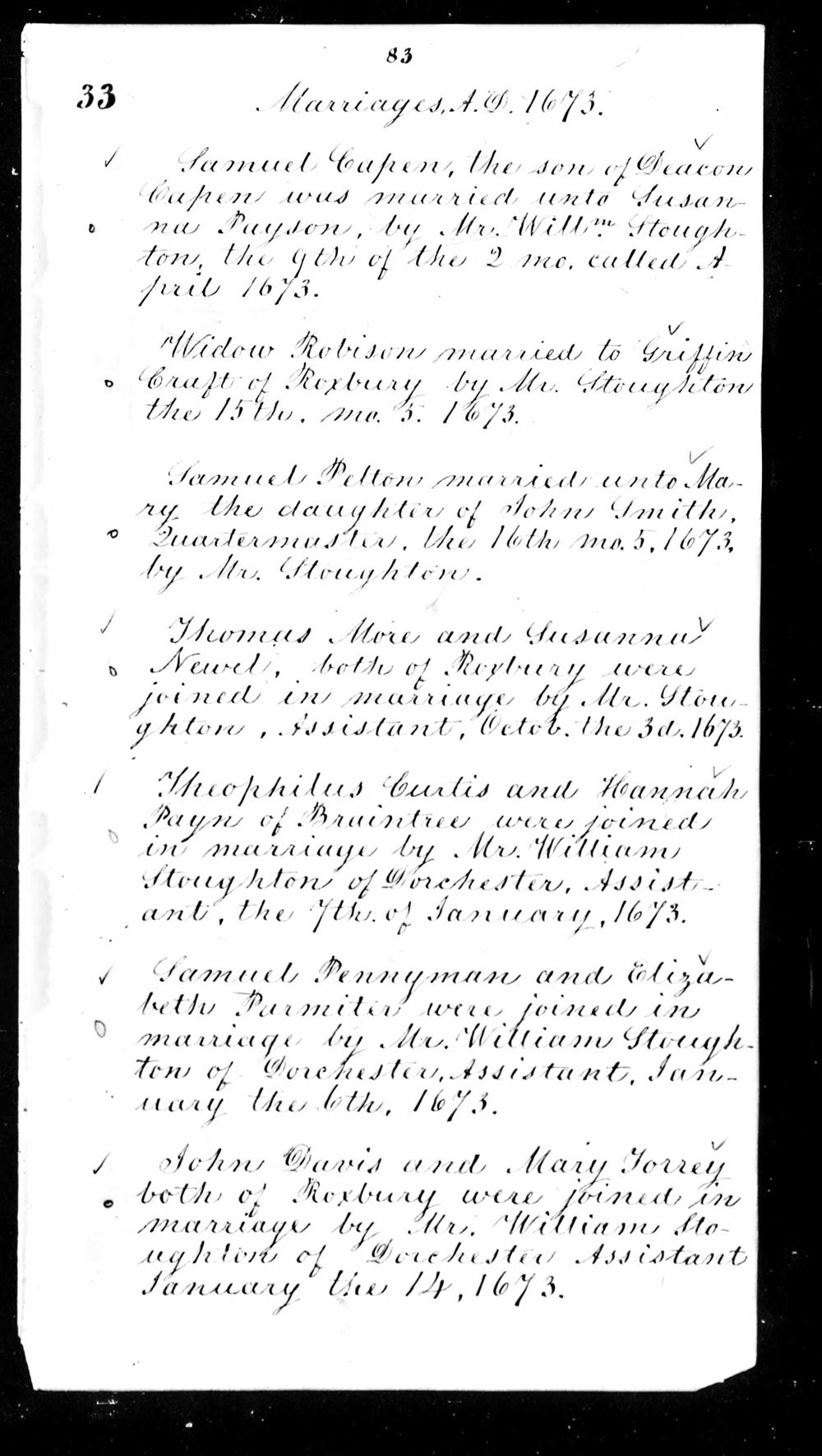
Marriage Register, 1673
Dorchester, Massachusetts. Town records, Marriages A.D. 1673, page 83.
"Samuel Pelton married unto Mary the daughter of John Smith, Quartermaster, the 16th mo. 5, 1673, by Mr. Stoughton."
Groom
Bride
Date
Samuel Pelton
Mary Smith, daughter of John Smith, quartermaster
16th day, 5th month, 1673
What it tells us: in 1673 the English year began in March, so the "5th month" was July. One line gives the bride's father, his rank, and the official who married them, the leads that carry a family line back another generation.
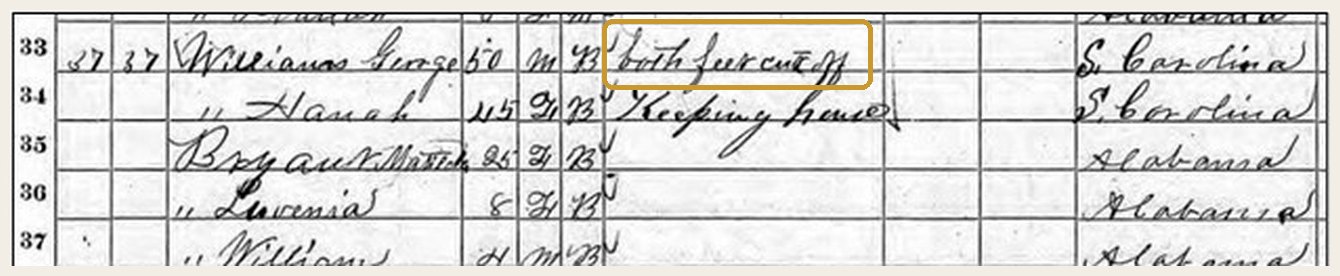
1870 U.S. Federal Census
Town of Guntersville, Marshall County, Alabama. Schedule 1, Page 5, Family 37. Enumerated June 3, 1870.
Name
Age
Occupation
Born
Williams, George
50
Both feet cut off
S. Carolina
Williams, Hannah
45
Keeping house
S. Carolina
Bryant, Martha
25
Alabama
Bryant, Lavinia
8
Alabama
Bryant, William
4
Alabama
What it tells us: the first federal record to name George Williams, five years after emancipation. Four words in the occupation column became the title of a book.
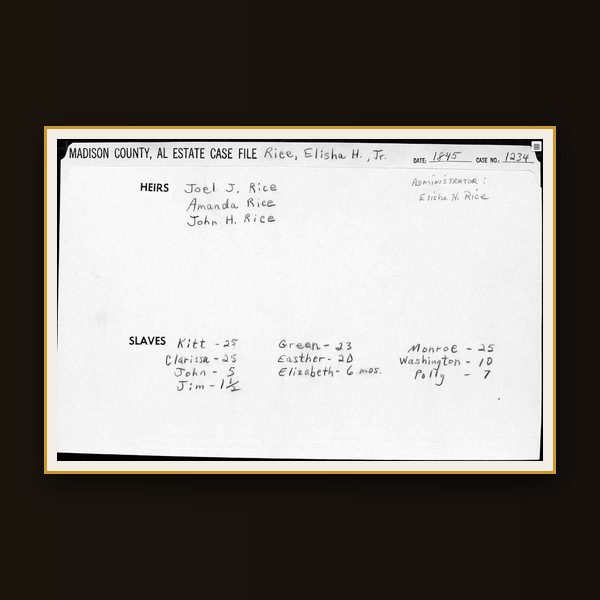
Estate Case File, 1845
Madison County, Alabama. Rice, Elisha H., Jr. Case No. 1234. Administrator: Elisha H. Rice.
What it tells us: ten people recorded by name and age twenty years before freedom. Names and ages like these are the leads we carry forward into the 1870 census, the first that named formerly enslaved people.
Sample pages
Read the work
Two excerpts from Both Feet Cut Off, Yet We Stand, the history of Dr. Gober's paternal family.
Both Feet Cut Off, Yet We Stand
Preface
Look at her hands
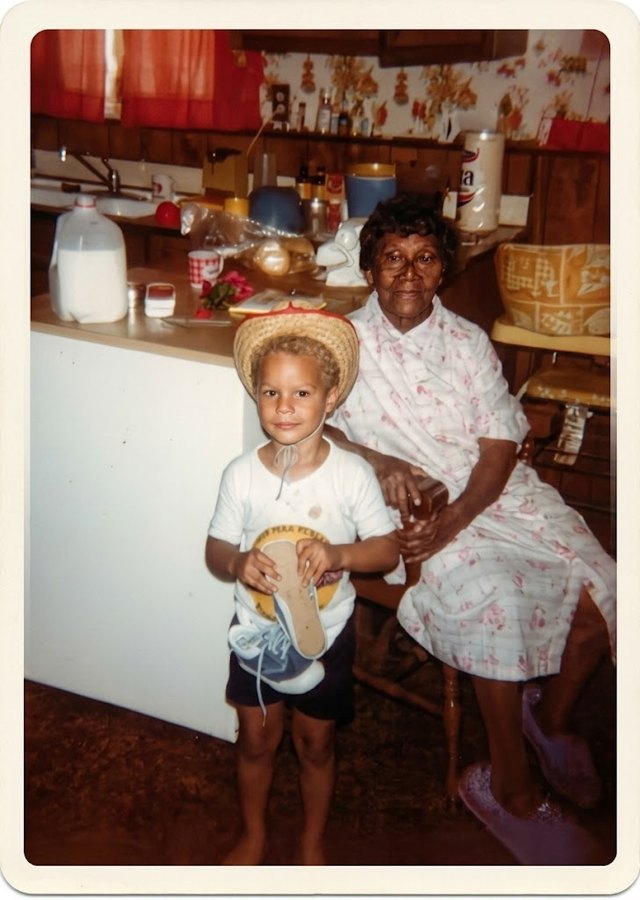
Photograph 0.1: Annie Lee Erskine, "Motherdear," with her great-grandson Courtney Carson Gober, c. 1980.
LOOK AT HER HANDS.
That is where this book begins. Not in an archive. Not in a census record. Not in a library or a database or a research trip to Alabama.
It begins with that photograph, with those hands, and with the morning I finally understood what they meant.
The woman in that photograph is Annie Lee Erskine. My family called her Motherdear. She was my great-grandmother. Annie Lee Erskine was born in Guntersville, Alabama, on March 12, 1884, and died in Detroit at ninety-six years old, on September 27, 1980.
The child in the straw hat is me.
I was approximately two years old. I do not remember that day. But at some point in my adult life, after years of tracing this family through census records, courthouse documents and government archives, I looked at that photograph again and understood something I had not understood before.
Motherdear was the daughter of slaves. Her father, Anderson Erskine, was born into slavery around 1851. Her mother, Paralee Williams, was born into slavery around 1858. Both of them were the legal property of other human beings for the first decade of their lives. Both of them were freed by emancipation in 1865 with nothing. No land, no money, no last name that had not been given to them by the men who had owned them. Nineteen years later, they had Motherdear. She grew up in the hands that had known bondage. And then those hands held mine.
That is not a metaphor. That is not a rhetorical device. That is the literal, documented, physical truth of what happened in that kitchen in Detroit in 1980. The same hands that had been shaped by parents who were born into slavery, who had been prayed over by those parents, held by those parents, loved by those parents in whatever space bondage allowed for love, reached forward across a century and held me. Prayed over me. Called me by my name.
When I understood that, I knew I had to write this book.
Every family has a story. Most of those stories never get written down. The people who lived them die, the people who remember them age and forget, and the chain of memory breaks. We are left with names on grave markers and nothing more. I was not willing to let that happen.
Both Feet Cut Off, Yet We Stand
Chapter Two
George and Hannah Williams
The 1870 federal census, the first taken after emancipation, is the document that places George Williams in the historical record. The enumeration of Guntersville, Marshall County, Alabama, taken on June 3, 1870, was the document that named George Williams in the federal record for the first time. In the column reserved for occupation, the enumerator wrote four words: BOTH FEET CUT OFF.
George Williams was born in South Carolina around 1820, into the third or fourth generation of his family’s bondage in that colony. He was sold or otherwise transferred into Alabama no later than 1845, the year of his eldest documented daughter’s birth. The domestic slave trade, sometimes called the Second Middle Passage, moved an estimated one million enslaved people from the upper South and the Atlantic coast into the cotton states of the Deep South between 1790 and 1860 and broke up families on a scale comparable to the Atlantic crossing itself. The records that would identify which household sold him in South Carolina, which trader carried him west, and which Alabama operation purchased him have not been discovered.
Hannah Williams
Hannah Williams appears in the 1870 census as George’s wife, age forty-five, born in South Carolina. The placement of both spouses in the same state of origin is one of the more revealing facts on the page. It does not prove that George and Hannah were transferred to Alabama together, but it raises the possibility that they came from the same South Carolina region and may even have known one another in their first place of bondage. The maiden name Hannah carried before her marriage to George has not surfaced in the records. Whether their union was solemnized by clergy, recognized by the slaveholders’ permission, or maintained only within the enslaved community “jumping the broom” cannot be determined; slave marriages had no legal standing under Alabama law before emancipation. Some formerly enslaved couples ratified their unions through the
The Household at Guntersville, June 1870
Ten people lived under the Williams roof on the morning the census taker came through. The Assistant Marshal began the household at the bottom of page five on June 3 and ran out of room before he was finished. He picked up the same family at the top of page six the next morning, June 4, 1870, and kept the family number as 37 across the break. The full household read in this order.
The Real Estate column for the household reads zero. The Personal Estate column reads zero. They held no recorded property of any kind.
What the household ran on does not appear on the census page. George could not work. Martha had a nursing infant. Hannah and Martha together held the dwelling and the children together in a small Tennessee Valley town five years out of slavery, in a state whose Black Codes had attempted the year before to channel formerly enslaved labor back onto white-owned land at wages set by the white landowners. The most likely picture is one of subsistence: a kitchen garden, washing taken in for cash, sewing or piecework, occasional day labor when adult hands could be spared from the children, and the kind of extended-kin economy that Black households across the Reconstruction South pieced together because no other source of survival was available to them. Whatever the specific arrangement of cash and labor in this house, the arrangement worked. By 1875, when Paralee left it to marry Anderson Erskine, the Williams household had survived five years of freedom on the strength of two women and what they could earn, scrounge, and grow.